
What a Skipped Checkup Actually Costs You
A garage door that's ignored all year doesn't just get noisy — it gets expensive. In Berks County, winter brings repeated freeze-thaw cycles, road salt tracked in on tires, and nor'easters that pile snow against the bottom seal. A door with worn weatherstripping, a slightly bent track, or hardware that's crept loose all summer will take that stress and turn it into a real failure: a spring that snaps on the coldest morning of the year, a cable that frays and jumps the drum, or an opener that strains so hard against ice at the bottom rail that the motor burns out. Any one of those means a trapped car, an exposed garage full of cold air, and a repair bill that's bigger than it needed to be. Twenty minutes now heads most of that off.
Tools You'll Need
- Work gloves
- Flashlight
- A rag and a silicone-based garage door lubricant (not WD-40 or household oil, which attract grit and gum up in cold weather)
- A stepladder
- A 2x4 block of wood or a tape measure
- A socket wrench or screwdriver for visible hardware
The 20-Minute Routine
- Look at the weatherstripping along the bottom of the door. Older homes in this area often still have their original doors, and original seals get brittle fast after a few winters of freeze-thaw cycling. If it's cracked, flattened, or pulling away from the track, it'll let in snowmelt and cold air all season. Replacing it is a straightforward DIY job — strips are sold by the foot at most hardware stores.
- Check the weather seal where the panels meet. Run a hand (gloved) along the seams where sections connect. Gaps here let moisture in, which can rust hinges and hardware over winter, especially with road salt in the mix.
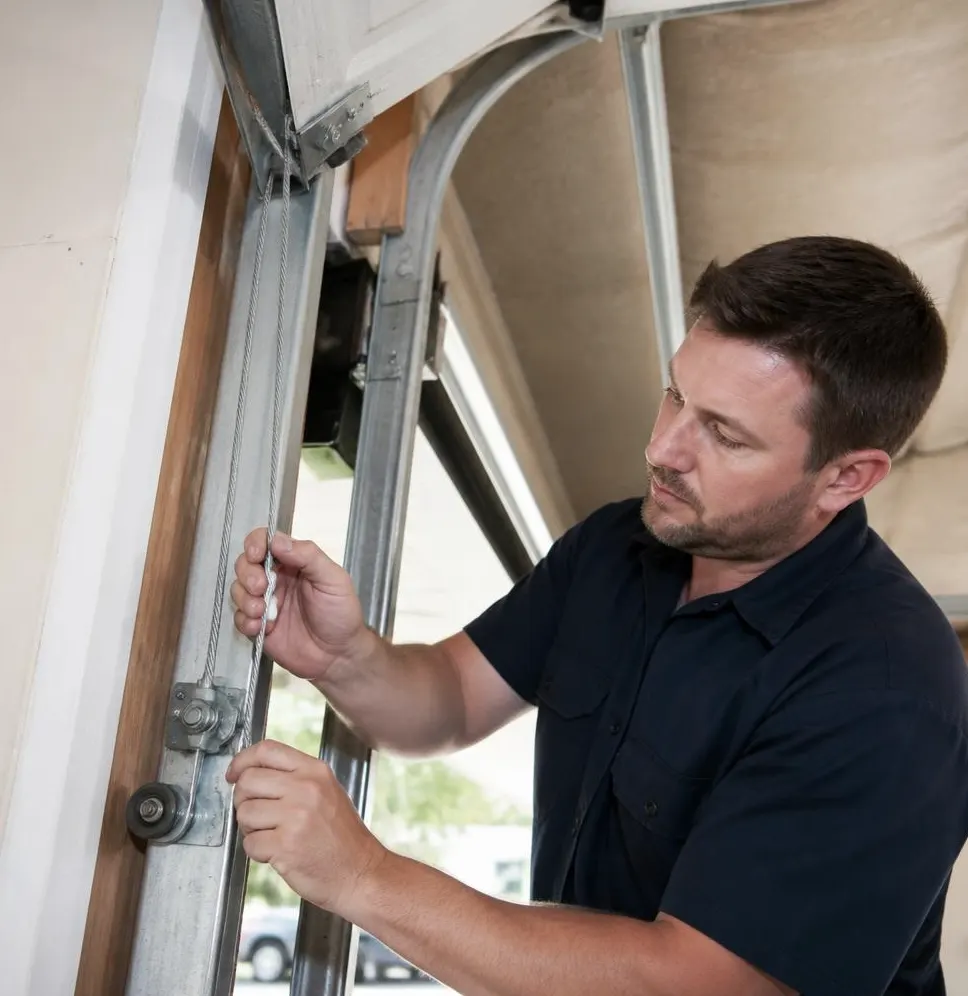
- Inspect the tracks on both sides. Shine the flashlight along the full length looking for dents, rust, or spots where the track has pulled away from the wall. Minor surface rust you can wipe down; a bent or separated track is not a DIY fix — more on that below.
- Tighten visible hardware. Hinges, roller brackets, and the mounting brackets that hold the track to the frame all loosen slightly from months of vibration. Go over them with a socket wrench, but stop at anything connected to the torsion spring system — that's not homeowner territory.
- Lubricate the moving parts. Apply the silicone lubricant to the rollers, hinges, and the track itself (a light coat, wiped with the rag so it doesn't pool). Do this now, before the cold sets in — lubricant goes on more evenly above freezing and will carry the door through icy mornings instead of letting metal grind on metal.
- Test the auto-reverse safety feature. Place the 2x4 flat on the ground where the door would close, and run the door down onto it. It should reverse immediately on contact. If it doesn't, or if it hesitates, that's a sensor or force-setting issue — stop testing and call a technician before using the door again.
- Check the photo-eye sensors. Wipe the small lenses near the bottom of each track with a clean rag. Humid summers leave a film on these, and a dirty or misaligned sensor is one of the most common reasons doors refuse to close correctly once the weather turns.
- Test the manual release. Pull the emergency release cord with the door closed and confirm you can lift the door by hand smoothly. If it's heavy, uneven, or won't budge, that's a sign of spring imbalance — don't force it.
- Replace the opener's remote and keypad batteries. Cold weather drains batteries faster, and a dead remote during a snowstorm is its own small emergency.
Where This Routine Stops and a Technician Takes Over
Everything above is safe for a homeowner to handle with basic tools. What's not on that list: anything involving the torsion or extension springs, the lift cables, or a track that's bent enough to need realignment. These parts are under heavy tension, and on older Berks County homes they're often original equipment that's past its rated cycle count. A spring that looks fine in October can fail under the added resistance of ice and cold metal in January — and torsion springs in particular should only be adjusted or replaced by someone with the right bars and experience.
When to Call Shoemakersville Garage Door
If your checkup turns up a bent track, a door that won't reverse properly, cables that look frayed, or a spring that seems to be sagging or stretched unevenly, that's our job, not a weekend project. We handle Cable & Track Repair and Spring Replacement for homes throughout Shoemakersville, Hamburg, Leesport, Bernville, and the rest of Berks County, and we can also run a full Garage Door Maintenance visit that covers the parts of the system that aren't safe to open up yourself — opener force settings, spring tension, and hardware torque — so the whole door is ready for whatever this winter brings.
Give Shoemakersville Garage Door a call before the first hard freeze and let us handle the parts of the job that need a trained hand.